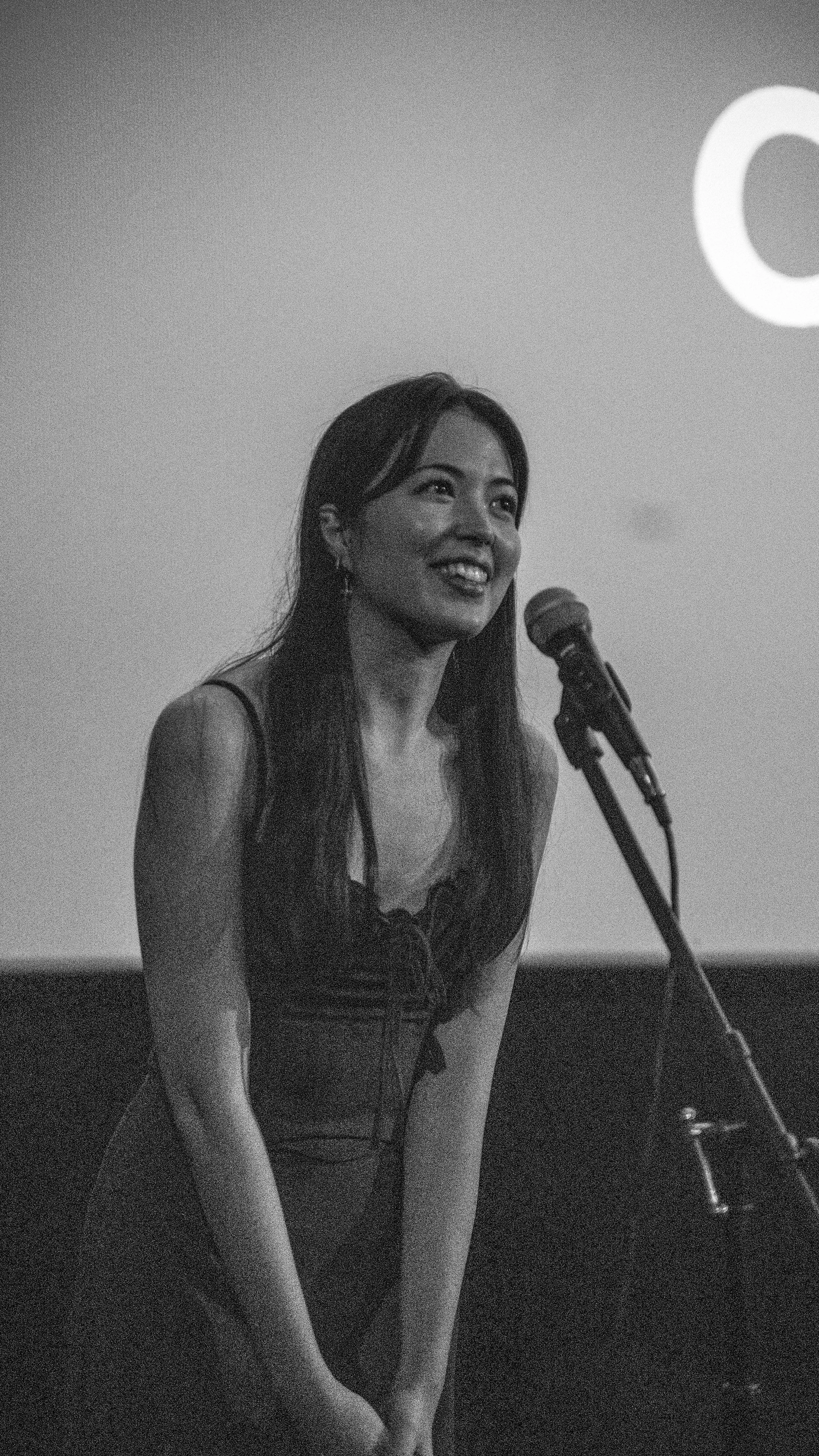
Interview with Filmmaker Muraya Moore
Muraya Moore is a writer and director who is passionate about telling unique and nuanced female stories, particularly those of Asian women. Her most recent short film Blood Sisters has been selected for SXSW Sydney, Brisbane International Film Festival and the Byron Bay Film Festival, where she was nominated for Young Australian Filmmaker of the Year. Her previous short films, Lemons and Prima, have garnered success at several film festivals across Australia, including the St Kilda Film Festival, Gold Coast Film Festival, Sydney Underground Film Festival and the West End Film Festival. She is currently in post-production for her next short, Hafu, inspired by her childhood growing up half-Japanese.
In this interview, we delve into Moore’s filmmaking journey, exploring the inspiration and influence behind her creative work, lessons and constraints, and the poignant expression of cultural identity, and femininity.
1. Your works often centre around nuanced female stories, especially those of Asian women. What first drew you to exploring this intersection of identity and femininity through film?
I think I’ve always been naturally drawn to this intersection, being a half-Japanese, half white Australian woman. Throughout my life, I’ve grappled with those two parts of me, and I am constantly finding where I fit into the world as a mixed-race woman. I also just didn’t see many stories with complex Asian women portrayed authentically on screen. Growing up I loved Sofia Coppola’s work for her nuanced depictions of what it is to be a girl. I wanted to see Asian women in stories like those. I truly believe there are a plethora of stories to be told within that intersection.
2. Blood Sisters has screened at major festivals like SXSW Sydney, Brisbane International Film Festival, and Byron Bay, where you were nominated for Young Australian Filmmaker of the Year. What has that kind of recognition meant for you personally and artistically?
I feel so honoured that people even watched the film, so getting this recognition was very special. Playing at these film festivals has opened up a lot of doors that I really wasn’t expecting to get to until years down the track. It’s nice encouragement to keep going too, and to know that I must be doing something right. I often feel like an imposter though, and there’s been several occasions where I was so worried that some good news I got was actually a mistake.
The flipside of it all is when you don’t get the recognition, and in reality there are far more no’s than yes’. It’s hard in this industry to not see that recognition as a measure of the worth of your work. So at the same time, I try not to get too caught up in that, and if ever I’m doing something purely for the recognition - well, that’s the death of a storyteller to me.
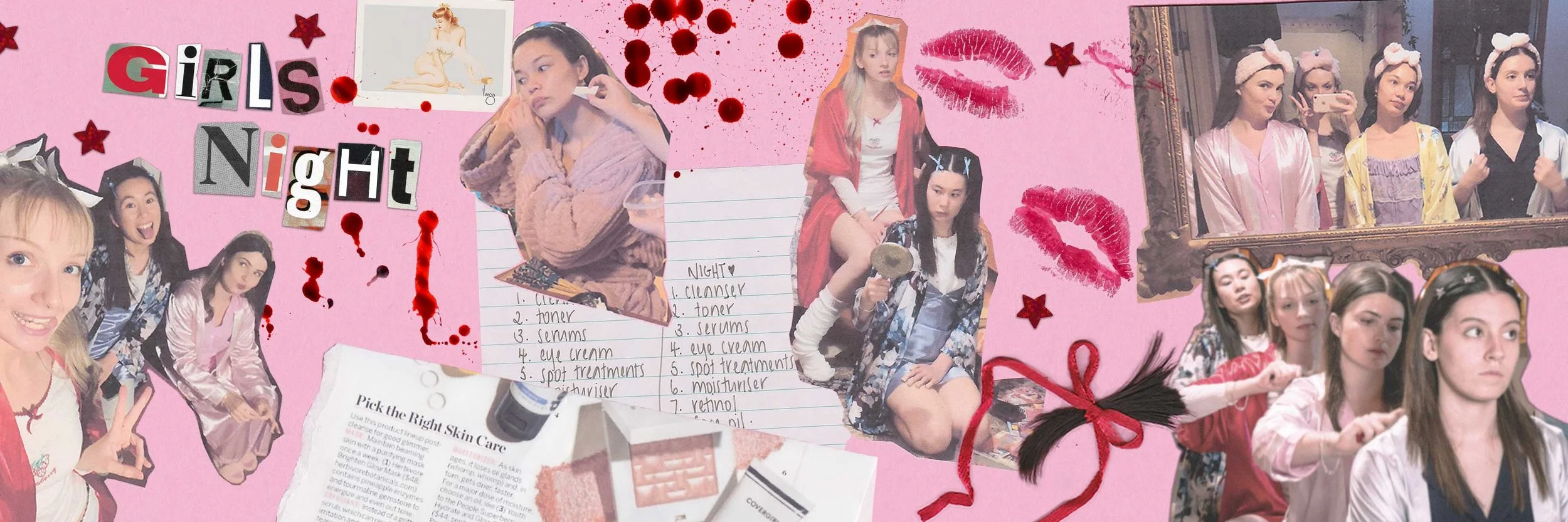
A Collage of the Blood Sisters Cast
3. Independent filmmaking often requires a mix of resourcefulness and restraint. How do budget limitations shape your creative decisions – do they feel more like constraints, or do they sometimes push you towards ideas you wouldn’t have explored otherwise?
They are constraints but that can often be good for the story. There is a lot of compromise, creative resourcefulness and adapting. It forces you to narrow down what is really important. With Blood Sisters, I would’ve liked to have pushed the body horror elements further, but we just didn’t have the budget and resources for the special effects. Instead, the short became about capturing the tone and feeling, by mostly inferring the horror, which could be explored in the feature down the track. It allowed me to really hone in on what was at the core of the story.
4. Collaboration shapes every frame of a film. When working with your production team (DOP, sound, set design etc), how do you communicate your vision in a way that keeps the film aligned with your intended vision while still leaving room for their creativity?
I really see collaboration as a wonderful process, when done right. Before I share anything with anyone, I need to really understand what is at the heart of the project. That becomes the north star. I have to believe that I am the right person to lead it too. Once I’m sure of that, it’s then making sure everyone else involved understands that - through treatments, references, talking about it, trialling and testing things etc. Every creative decision has to come back to that north star and I choose to work with people who will honour that. There’s a lot of trust involved going both ways, and I try to give space for everyone to have their own interpretations and responses to the north star. Everyone is invited to bring all their ideas to the table and together we distill it down to what is at the core. It’s not about what I want or what anyone else wants, it’s about what the story needs. As the director, I see myself as the protector of that. If we go astray or egos get involved, it’s my responsibility to bring us all back to the north star.
5. Casting can make or break a film. What do you look for in actors when casting for your films, and how do you know when someone is the right fit for a role?
In any audition, I love talking to the actors and finding out who they are as people, not just seeing them “perform” as the character. I want to know what their connection to the story and character is. I obviously want to see how they take direction, but it’s not always about them doing it the way I want them to. I love being surprised about what an actor has to offer and where they will take something. When they show me something new about a character, that’s exciting.
6. In filmmaking, things rarely go exactly as planned. Can you share a behind the scenes moment, big or small, that challenged you but ended up teaching you something surprising about yourself as a director?
I’m big on planning, so I remember a moment on set when things weren’t going according to plan. A shot wasn’t working at all and we had to completely rethink things. We were running out of time and in those moments, you go into a bit of a fight or flight mode, when everyone turns to you for answers. There’s a part of you that is freaking out and wants to run away, but you can’t show it. I really had to trust in myself that I knew the story and let that guide all the decisions. And it worked out, maybe even for the better. I think up until that point, I hadn’t really trusted myself as a director and part of the need to plan was because of that fear, so that I could prevent myself from “failing” on set. I still like planning but now I trust myself more in those moments when the plan isn’t working out, because it very often doesn’t in filmmaking.
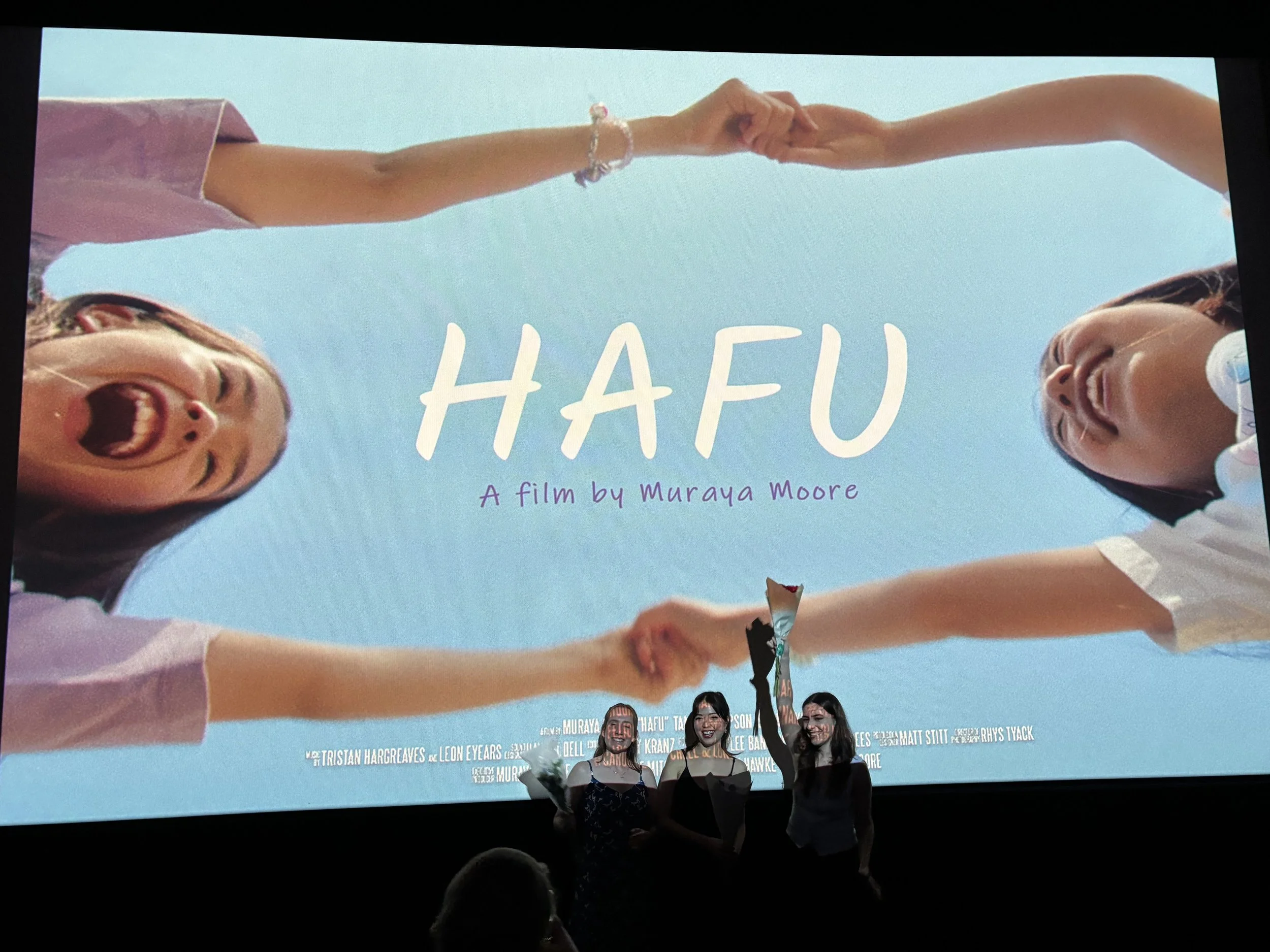
Hafu Cast and Crew Screening
7. You’ve mentioned in an interview that it was difficult to “work out a way” to produce your film “Hafu”. What finally clicked – was it a structural choice, a visual device, or something else that pushed you to pursue a specific artistic direction?
Hafu is a story that is very personal to me that I’d been thinking about for years - well, my whole life really, and I’m sure I will continue to share that part of me in different forms of stories. Half of it was finding the right narrative device - which I won’t spoil - but I wanted to articulate my struggle between two identities in a tangible, visual way. The other half of it was actually just being ready to share that story. It’s hard, digging deep within yourself and putting a little piece of your heart into your work, then putting that out into the world. It’s daunting and I needed to make a few other things first to gain the confidence I needed to make ‘Hafu’. That confidence still wavers though, and even now the film is done, I still find it hard to share and watch.
8. Across Blood Sisters, Lemons, and Prima, your filmography carries a very recognisable emotional quality. If someone close to you were to watch your work back-to-back, what’s one theme or “signature Muraya element” you think they’d say is unmistakably yours?
I think different people in my life would see different things. There’s the theme of young women finding their place in the world, whether it’s a coming of age like Hafu or disguised as a horror in Blood Sisters. There’s a very human need for acceptance and belonging at their core that derives from my own life. Others might say the open endings. I don’t try to give answers in my work because I don’t have them myself, but I hope this invites audiences to ponder and interrogate the subject further and come to their own conclusions. Or perhaps the feeling of forebode or dread, which I think is reflective of my own anxieties about the world. This is kind of masked visually by elaborate production design and carefully composed shots, which others might pinpoint as my “signature style”. I am drawn to the beauty in detail, and my crew and I put a lot of care into putting meaning and intention into every frame. It’s likely not one single thing, but the combination of all those things. Or people may pick out something completely different that I haven’t even realised.
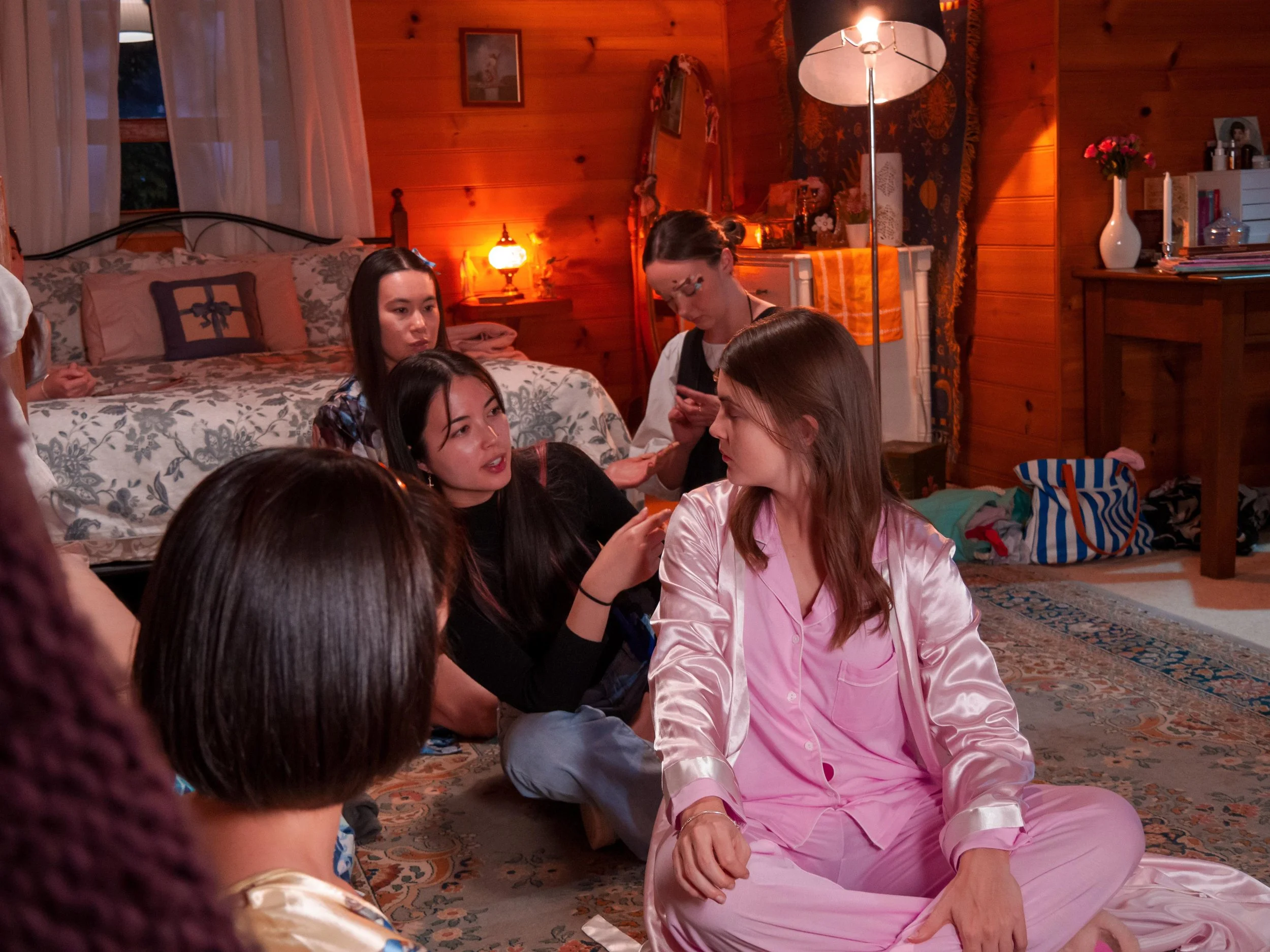
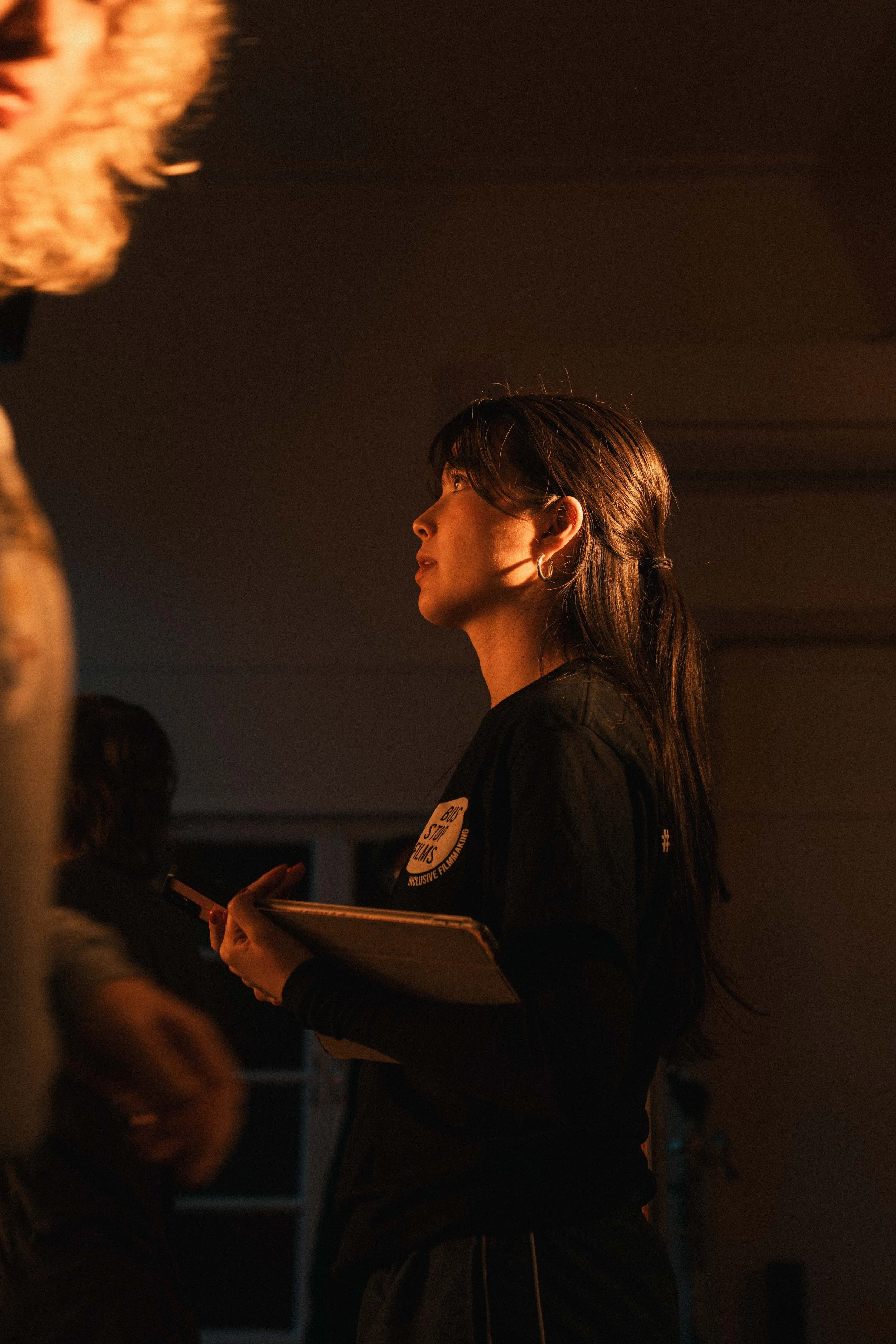
Behind the Scenes of Blood Sisters
9. Looking ahead, what do you hope your films contribute to the landscape of Australian cinema and to the stories of Asian women on screen?
I see myself as a small part of this wave of emerging filmmakers highlighting stories that haven’t been told and telling them boldly and honestly. I’m surrounded by peers who excite me and inspire me in that way. There’s also so many incredible storytellers who have come before us, particularly First Nations storytellers, who have really paved the way for more underrepresented voices to be heard. I hope to be a part of continuing to do that for Australian cinema, especially for women. And when I say I want to see more Asian women on screen, I want to see a range of Asian women portrayed on screen - not just the good, but the complex, morally ambiguous characters as well. I think those are the kind of characters that really get us to dig deep within ourselves and interrogate who we are as humans. I hope that’s something my stories might be able to offer.